
Outdoor event planning in Greece may begin with one obvious consideration — the weather — but a successful open-air event depends on much more than sunshine and a clear forecast. From the way guests move through a venue to lighting, sound, accessibility, catering logistics and contingency planning, every detail influences how effortless the experience ultimately feels.
Greece offers an exceptional setting for outdoor celebrations. Coastal venues, private estates, gardens, terraces, courtyards and poolside locations provide a strong natural backdrop for weddings, private occasions and corporate events.
But a beautiful setting alone does not guarantee a successful event.
The most memorable outdoor experiences are created when the natural environment becomes part of the event design while the practical complexities remain almost invisible to the guests.
That requires planning beyond the forecast.
Outdoor Event Planning in Greece Starts with the Right Venue
The first question is not simply whether a venue is beautiful.
It is whether the venue can actually support the type of experience you want to create.
A spectacular view can make an immediate impression, but event planners also need to evaluate the operational side of the location. Guest capacity, access, electricity, catering infrastructure, parking, bathrooms, loading areas and alternative spaces all matter.
Before selecting an outdoor venue, consider:
- how guests will arrive and depart
- whether there is comfortable access for all attendees
- where suppliers can load and unload equipment
- whether sufficient electrical infrastructure exists
- where catering preparation can take place
- how far bathrooms are from the main event areas
- whether there are restrictions on music or event hours
- what alternatives are available if conditions change
The best venue is therefore not necessarily the one with the most impressive photograph.
It is the one that combines a strong visual identity with the infrastructure required to deliver the event smoothly.
Design Around the Landscape, Not Against It
One of the greatest advantages of an outdoor event is that the setting already provides part of the design.
The sea, vegetation, stone architecture, garden landscape or open horizon can become central elements of the visual concept.
Trying to overpower these surroundings with excessive decoration often weakens rather than strengthens the overall aesthetic.
Instead, successful outdoor event design works with the environment.
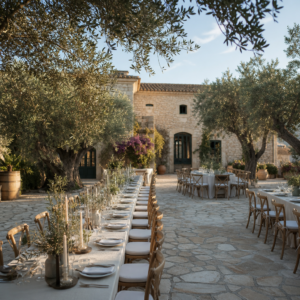
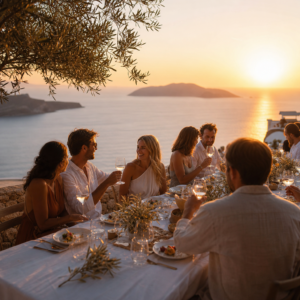
A coastal venue may need little more than a sophisticated tablescape and thoughtfully designed lighting. A garden setting can be enhanced through floral installations that appear naturally connected to the existing landscape. A stone courtyard may work best with candles, warm materials and restrained colour.
The objective is not to fill every available space.
It is to identify what already makes the location special and design around it.
Think About the Guest Journey from Arrival to Departure
Outdoor events often occupy larger and less structured spaces than indoor events.
This makes guest flow particularly important.
From the moment guests arrive, they should intuitively understand where to go next.
The journey might begin with a welcome area, move toward cocktails, continue to dinner and eventually transition to entertainment or dancing.
Each stage should feel connected.
Paths, lighting, signage, furniture placement and staff positioning can all help guests move naturally through the experience without constantly needing instructions.
For larger venues, even the distance between different areas needs careful consideration.
A spectacular dinner location loses some of its impact if guests must walk uncomfortably far to reach it or navigate poorly lit paths in formal footwear.
Good event planning makes movement feel effortless.
Guest Comfort Is More Important Than the Forecast
A sunny forecast does not automatically mean comfortable conditions.
Temperature, direct sunlight, wind, humidity and evening temperature changes can all affect the guest experience.
For daytime events, shade is essential. Depending on the venue and concept, this might come from trees, umbrellas, pergolas or temporary structures designed as part of the aesthetic.
For evening celebrations, planners should consider whether temperatures are likely to drop and whether certain areas of the venue may become noticeably cooler.
Comfort also extends beyond temperature.
Seating should be appropriate for the surface. Walking routes should work with guests’ footwear. Lounge areas should be positioned where people actually want to spend time rather than simply where they look attractive in photographs.
The objective is simple: guests should be able to enjoy the setting without having to manage the setting.
Wind Can Change Everything
Wind is one of the most underestimated factors in outdoor event planning.
Even on a clear, pleasant day, strong or persistent wind can affect almost every element of an event.
It can influence:
- table styling and lightweight decorative elements
- floral arrangements
- candles and open flames
- printed menus and place cards
- sound quality
- temporary structures
- guest comfort
This is particularly relevant for coastal and elevated locations.
Design solutions should therefore take the characteristics of the venue into account from the beginning. Decorative elements can be secured discreetly, floral structures can be engineered appropriately and lighting choices can be adapted when traditional candles are impractical.
These decisions are easier — and usually more elegant — when they are made during the design stage rather than as last-minute corrections.
Lighting Should Be Planned Before Sunset
Natural light is one of the biggest advantages of outdoor events, but it eventually disappears.
The transition from daylight to evening therefore needs to be designed deliberately.
Lighting serves several different purposes:
- creating atmosphere
- illuminating dining areas
- highlighting architecture and landscape
- making pathways safe
- supporting photography and video
- defining different zones of the venue
The best lighting plans work gradually.
During sunset, subtle illumination begins to appear. As natural light fades, architectural lighting, candles, suspended fixtures and carefully positioned accent lights become more prominent.
The venue should never suddenly feel dark simply because sunset arrived.
Lighting should follow the event naturally, becoming part of its rhythm and atmosphere.
Sound Works Differently Outdoors
Sound behaves very differently in an open environment.
Without walls to contain it, music and speech can dissipate quickly. At the same time, nearby residences or local regulations may impose restrictions on volume or timing.
This makes professional sound planning essential.
The technical setup should take into account the shape and size of the venue, the location of speakers, the number of guests and the different phases of the event.
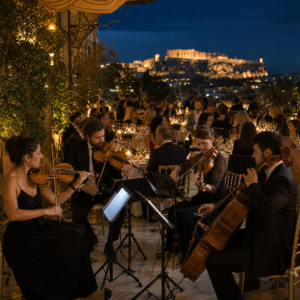
A ceremony or corporate presentation requires clarity. Dinner needs music that supports conversation. A party requires enough energy without creating uncomfortable volume elsewhere in the venue.
Sound should therefore be treated as part of the overall guest experience rather than simply as an equipment requirement.
Power Infrastructure Must Be Planned Carefully
Outdoor venues may not always provide the electrical capacity required for a complex event.
Lighting, catering equipment, sound systems, DJ setups, live music, bars and production infrastructure can all require significant power.
Technical teams should evaluate these requirements well before the event.
Where additional generators or distribution systems are necessary, they must be positioned strategically so they remain operationally effective without becoming visually or acoustically intrusive.
This is one of the less glamorous sides of event planning, but it has a direct impact on everything guests ultimately experience.
Catering Requires a Different Approach Outdoors
Serving food outdoors creates its own logistical considerations.
The distance between the kitchen or preparation area and the dining space is critical. Food must arrive at the correct temperature and service teams need efficient routes that do not interfere with guests.
Planners should consider:
- where food preparation will take place
- how dishes will travel to the dining area
- temperature control
- service timing
- bar positioning
- glassware and water service
- waste management
The menu itself should also reflect the environment.
For a warm outdoor celebration, lighter dishes, seasonal ingredients and a service style designed around the rhythm of the evening may work better than a menu developed without reference to the location.
Food is part of the setting as much as it is part of hospitality.
Do Not Underestimate the Importance of Bathrooms
It may not be the most glamorous part of event design, but bathroom access can significantly influence how comfortable guests feel.
The number, location and quality of facilities should always be assessed before confirming a venue.
If temporary facilities are required, they should be positioned discreetly while remaining easy to find and access.
Pathways should be properly illuminated, and the experience should remain consistent with the overall standard of the event.
Luxury is often defined by details guests should never have to think about.
Accessibility Should Be Part of the Initial Plan
Natural outdoor locations are not always naturally accessible.
Gravel, grass, uneven stone, stairs and long walking distances can create challenges for some guests.
Accessibility should therefore be considered during venue selection rather than addressed at the last minute.
Event planners may need to evaluate alternative paths, transportation within large properties, accessible seating and bathroom facilities.
Thoughtful planning ensures that the experience is welcoming to everyone.
Plan for Insects Without Disrupting the Atmosphere
Outdoor environments also come with smaller practical considerations.
Insects can become particularly noticeable around gardens, vegetation, water and food service areas.
The solution should be discreet and considered in advance.
Venue maintenance, food management and appropriate professional treatments can all help, depending on the location and season.
Again, the objective is not for guests to notice the solution.
Good planning means that many operational decisions remain completely invisible.
The Plan B Should Never Feel Like Plan B
No discussion of outdoor event planning in Greece is complete without contingency planning.
Even during periods associated with stable weather, outdoor events need an alternative scenario.
The mistake is to treat the backup plan as an emergency solution developed only if something goes wrong.
A strong Plan B should be designed with the same level of care as Plan A.
Depending on the venue, this might involve:
- an indoor space that can accommodate the full guest list
- a covered terrace or permanent structure
- temporary weather-resistant structures
- a flexible floor plan that can be adapted quickly
- alternative locations for dining, entertainment or ceremonies
The design concept should ideally work in either scenario.
This ensures that if plans need to change, the event still feels intentional rather than compromised.
Timing Matters More Outdoors
The schedule of an outdoor event should respond to the environment.
Sun position, sunset time, temperature and natural light can all influence the ideal sequence of the day.
A ceremony scheduled during harsh direct sunlight may be uncomfortable and visually challenging. Moving the same moment later can completely change both the atmosphere and the photographs.
Similarly, dinner may be designed to begin during the transition into sunset, allowing guests to experience the landscape in different ways throughout the evening.
The environment therefore becomes part of the timeline.
Outdoor Weddings in Greece
For weddings, outdoor venues offer exceptional possibilities.
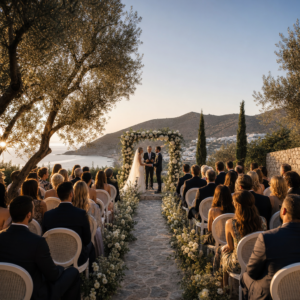
Ceremonies overlooking the sea, dinners beneath trees, receptions in private estates and celebrations in courtyards can create experiences that feel deeply connected to place.
However, the visual concept should always be supported by practical planning.
The ceremony layout, shade, sound, guest movement, service access, lighting and transition into the evening all need to work together.
Professional wedding planning in Greece helps ensure that the beauty of the location does not come at the expense of comfort or functionality.
Private Outdoor Celebrations
Outdoor settings are equally well suited to birthdays, anniversaries, family celebrations and intimate dinners.
These events often benefit from a more relaxed structure, allowing guests to move naturally between dining, conversation, music and entertainment.
A garden, private residence, terrace or poolside setting can create an atmosphere that feels personal and effortless.
The key is to design around the way people will actually use the space.
At private events, furniture placement, lighting and hospitality should encourage interaction rather than simply create a visually impressive setup.
Corporate Outdoor Events Need Strategy as Well as Style
Outdoor corporate events can offer a welcome alternative to traditional conference rooms and hotel ballrooms.
Product launches, networking evenings, executive dinners, team events and brand experiences can all benefit from a more open environment.
However, corporate events introduce additional requirements.
Brand visibility, audiovisual production, presentations, connectivity, guest registration and programme timing may all need to coexist with the relaxed character of the venue.
Good corporate event planning balances these functional requirements with atmosphere, ensuring that the event feels professional without losing the advantages of an outdoor setting.
Why Professional Coordination Matters
Outdoor events typically involve more moving parts than guests realise.
Venue teams, caterers, florists, lighting designers, sound engineers, rental suppliers, musicians, photographers, transport providers and production crews may all need to work within the same temporary environment.
Professional coordination ensures that these elements are not managed independently.
Timelines, supplier access, setup sequences and technical requirements must be aligned well before guests arrive.
The more effortless an outdoor event appears, the more carefully it has usually been planned behind the scenes.
Beyond the Weather: Designing the Complete Outdoor Experience
The weather matters, but it is only one part of the equation.
The success of an outdoor event depends on the relationship between setting, comfort, logistics, design, hospitality and guest flow.
A breathtaking landscape may create the first impression, but the details determine how guests remember the experience.
They remember whether they felt comfortable, whether movement felt natural, whether they could hear the music and conversations, whether dinner flowed smoothly and whether the atmosphere evolved naturally throughout the evening.
This is why outdoor planning requires both creative and operational thinking.
Planning Outdoor Events in Greece with NAS Concept Events
At NAS Concept Events, outdoor events are approached as complete experiences rather than simply events placed outdoors.
The venue, landscape, design, logistics, lighting, catering, entertainment and guest journey are considered together from the beginning.
Whether the occasion is a wedding, private celebration or corporate gathering, the aim is to create an experience that feels naturally connected to its setting while remaining carefully controlled behind the scenes.
Because the best outdoor events should never feel complicated.
They should feel effortless.
If you are planning an outdoor celebration or corporate event in Greece, contact the NAS Concept Events team to create an experience designed around your venue, your guests and the way you want the occasion to feel.